
Perfectionism;
Some parents believe that they have to put a lot of pressure on their child in order to improve in the future. This pressure to do everything accurately and perfectly is one of the biggest problems in perfectionist families. Parents’ judgmental views, shame of their child’s mistakes, comparing their child with other children are all signs of perfectionism that put pressure on children. But many of these parents feel that these behaviors make them good and perfect parents. The problem is that parents’ perfectionism and the pressure that is imposed on the child to be better, not only affects the parents themselves, but also damages the child’s life. To build a better future for your children, there are many ways other than perfectionism that you can make changes in yourself and your child.
Perfectionist parents;
Perfectionist parents are always afraid of their child’s present and future. If they cannot send their child to the best university, they feel like a failure. Perfectionists believe that the standards set by them will make the child excel, but in reality, this is not the case and the situation may be the opposite.
Signs of perfectionism in raising children:
1-Putting children under the microscope and wanting to do everything without mistakes 2- Telling the mistakes of children to them quickly 3- Praising or blaming the child too much 4-Putting children under pressure to achieve their dreams 5- Examining your own impact on the child’s achievements and enjoying this work 6- Taking all the child’s daily activities seriously
How do we get caught up in perfectionism?
No one is immune to the unwanted desire to become a better parent, but working moms can fall into this trap even harder. This has two main reasons. – The first reason: Traditionally, working mothers seek to achieve the best results and try to be successful in other areas of their lives, such as raising children. The desire to succeed in business is somewhat natural and has certain signs. For example, a person tries to reach the highest position in the company where she is working. But unfortunately, the sense of extreme success in parenting does not have a clear and obvious limit. – The second reason: According to a survey conducted by sitecare.com, 80% of working women are constantly under tension because they cannot devote all their energy to raising their children. 79% of these people feel behind in parenting and 50% of them are afraid of this. Fathers also often fall into the trap of perfectionism. According to a survey conducted by the Pew Research Center in 2015, almost 50% of fathers would like to become the best parent. In addition, these studies show that today’s fathers spend 3 times more time with their children than fathers of the previous generation (specifically fathers born in the 60s). Parents are not the only victims of perfectionist parenting. Perfectionist parents have a strong negative impact on children’s lives.
Negative effects of perfectionist parents on children;
There is a difference between parents interested in standard education and perfectionist parents. It is good for parents to have high standards because these standards help children live and develop. Whereas perfectionist parents believe that if their child does not meet the highest standards, they and their child have failed. Putting too much pressure on children to be perfect will backfire. The effects of this pressure can lead to doing irrational things to get the desired result of the parents. For example, a child may cheat from his classmates due to heavy parental pressure to get good grades. Because he/she thinks that his/her parents will blame him/her if he doesn’t get top marks. We must know that children and teenagers of any age must accept the consequences of their actions, make mistakes and learn. Perfectionism can destroy children’s spirit and cheerfulness. Children who think they always have to be the best are more at risk for mental health problems such as depression, anxiety and other disorders. Usually they hide their mental problems and because of this, their mental problems are not treated. Perfectionism has a close relationship with self-righteous behavior and it happens to cause the child to fail most of the time. One day, your child may get tired of the pressure and leave the house, or if he/she tries to become a good athlete and does not succeed, he/she may give up sports forever.
Solutions to deal with perfectionism:
1- Pay attention to your words and comments. For example, if your child won the first place in a competition or if she failed to get a rank in a competition, do not praise or blame her too much. Ask your child what she is good at and what she can do better than before. 2-Be patient and calm in front of your child’s mistakes. If your child did not make her bed or got a bad grade in her exam, control your anger. Take a deep breath and relax. Remember that children can make mistakes and every mistake is a learning opportunity for them. 3- Avoid comparing your child with others. Most of the time, families compare their children with the children of their friends and relatives. Try to stay away from spaces that compare other people’s lives with your own. Don’t forget that you are only seeing a part of other people’s lives. The part they want you to see! You do not know the details of their lives. Children also have different moods and interests. 4- Focus on your positive points in parenting. You may not be a good teacher for your child in scientific fields and you may not be able to provide the best solutions for her. But you can teach her other things that you are successful in doing. When you can’t teach your child well, be strong and be a little more compassionate. 5- Consider failure or lack of success as an opportunity for children to progress. Let your child make mistakes or even fail sometimes. See failure as an opportunity to learn and tell your child that failure is frustrating but that she can succeed again by trying harder. 6- Pay more attention to your child’s effort than the result. Instead of praising your child’s high score in the school test, praise her effort to reach this score. Or, for example, if your child managed to score two goals in a soccer match, tell her that you noticed her hard work and praise her for her effort. This will make your child never stop trying. 7-Never insist too much on your child’s efforts. If your child stops trying for any reason, do not push her too much. Maybe because of your insistence, the child will not make any effort for what she intends to do. Challenge your child but don’t pressure her.
The last word;
If you have been a perfectionist parent to your child, try to reduce your level of perfectionism. Learn from your mistakes and be a good role model for your children. If you cannot control yourself, it is better to seek help from a child psychologist. Sometimes striving for perfection may be due to a mental health issue such as anxiety disorder or a history of bad memories. If perfectionism continues, you may develop chronic stress or other psychological problems. An experienced psychologist can help you overcome perfectionism. Treating perfectionism early is the best thing you can do for yourself and your children.
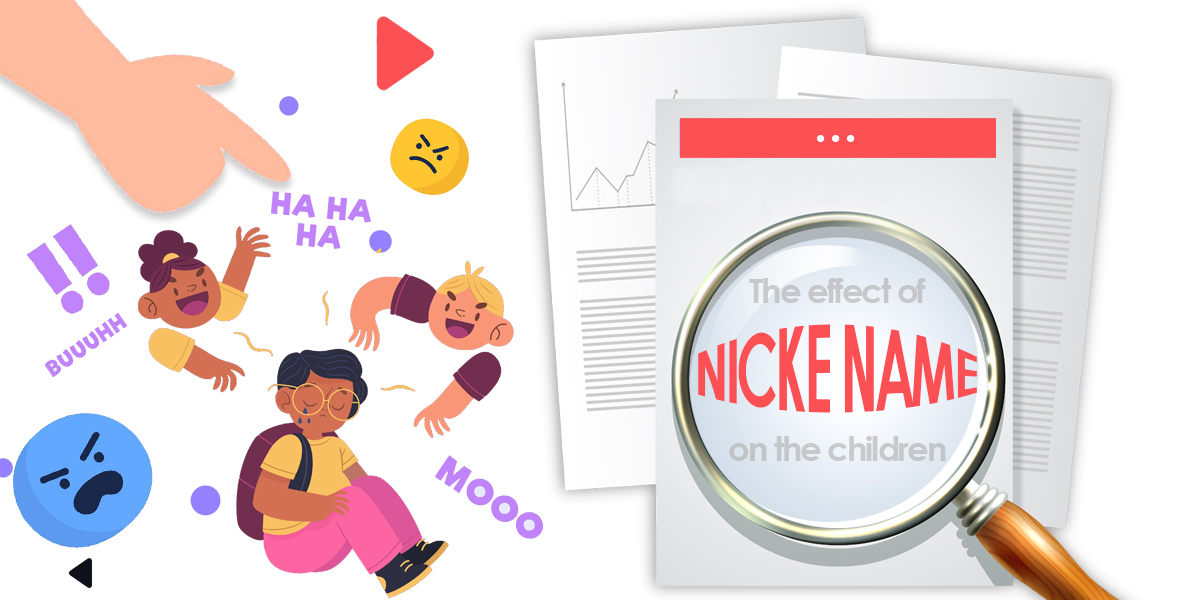
What is the effect of nicknames you give to children in adulthood?
All parents try to choose a good and beautiful name for their child and give him a nickname when his child reaches the sweet language and acting stage. Like mommy’s honey, daddy’s naughty, and… Do you know how nicknames for children affect the child’s personality as an adult? Is it true that a person who carries a nickname since childhood will carry this nickname in the future? In this section, we intend to introduce you to the effect of the nicknames you give your child in childhood and provide you with useful information in this regard. Join us.
Is it right to give nicknames to a child? To better understand the answer to this question, we must first give you complete explanations about the nicknames you give your child. Nicknames and words with which you address children have a great impact on the formation of your child’s personality. Maybe this nickname is because of your love for your child, and maybe you didn’t think about the meaning of this nickname at all and attributed it to your child. When you notice the child’s appearance and choose a nickname for the child based on these appearance characteristics, you actually make him understand that beautiful appearance is very important and he is beautiful because of this appearance. Is. For example, when you tell your child your beautiful hair is my whole world, beautiful hair mom! This attribute is registered in your child’s mind that you pay attention to him and love him because of his beautiful hair. Therefore, the child shows more sensitivity to the beauty of his hair, and if he ever cuts his hair, he will feel that he is no longer beautiful. In fact, with nicknames for children based on their appearance, you will let your child know that your appearance is very important to me. On the other hand, negative nicknames can have very negative effects on your child’s personality. For example, you give your child, who is very playful and lively, the attribute of saboteur. When you call him with this adjective, he will come to the conclusion that he has become a saboteur and because of this he is no longer ashamed of his saboteurs and maybe gradually and in the later chapters of his life even as an adult. Become a real wrecker. Therefore, giving a child this kind of attribute is not the right thing at all, and you should never attribute it to your child based on his or her appearance or negative actions.
What adjectives should I call my child? Maybe it is simple and trivial to give your child adjectives, but in fact, these adjectives guide your child’s personality. As we mentioned in the previous section, not only negative adjectives, but also some positive adjectives have a negative effect on a child’s personality. But you may be asked what qualities are suitable for a child? Or how should I name my child? Remember, nothing is as important in society as a beautiful character. If you have paid attention to your relationships, you will see that you are more attracted to those who have beautiful personality, not beautiful appearance. For this reason, you should pay a lot of attention to the attributes you give to your children’s personality. If you want to give your child a nickname, it is better to show his positive personality traits so that your child will feel the effect of this nickname until adulthood and have a beautiful personality in the future. For example, it is good that you always praise your child’s honesty and give him the title of honest, for example, my honest daughter! Honest mom! These nicknames can encourage your child to tell the truth. Or you can call him other adjectives that affect your child’s personality development. Remember that the nicknames you give your child make your child’s personality and have a great impact on the growth and development of your child’s personality.
Consequences of naming people
Calling people names hurts a lot and can have long lasting consequences. Consequences of nicknames include the following:
1. It destroys self-esteem: Over time, name-calling and other insults can slowly erode self-esteem. For example, if someone is regularly called “fat,” they may see themselves as fat even after losing weight. 2. It may compromise beliefs and values: When children are insulted for having certain beliefs or values. This naming may cause them to bend to peer pressure and compromise their beliefs to escape bullying. 3. Damage to the sense of well-being: Nickname the child It can cause significant changes in the personality and behavior of affected people. For example, adolescent victims may cry more, be hostile, or withdrawn. They may also find excuses to avoid school and lose interest in outside activities. 4. It affects the child’s identity: When a person gives someone a nickname, they are trying to control how others see them. For example, a bully might call someone “stupid”. This naming is usually done in front of others and is meant to encourage others to consider the person as “stupid”. If name-calling is repeated, eventually, that annoying label can become a part of that person’s personality. 5. It may lead to violence: If nicknames continue to be given to the child, it will affect the person’s behavior and mood in the future and cause the person to be violent most of the time. Many crimes in adulthood are caused by childhood insults and nicknames. 6. It harms mental health: Calling names can have serious consequences for mental health. In fact, many researchers feel that this is one of the most harmful parenting methods. Some victims may even consider suicide. If your child talks about death or wants to die, don’t ignore their comments. Get your child evaluated by a medical professional right away. 7. It endangers physical health: Often, when children are abused, their physical health is affected. In addition to difficulty eating or sleeping, they may also complain of stomach upset and headaches. In addition, some children may develop post-traumatic stress disorder or other stress-related conditions.
Last words and summary
Naming a child has a direct impact on the child’s personality as an adult. In this article, we read that even some positive nicknames can have negative effects on a child’s personality. It is better to reconsider the adjectives and nicknames you give your child with sufficient understanding of this matter and use attributes that have a positive effect on your child’s personality. By changing the attributes and nicknames you give to your child, you can see what positive effects you will have on your child’s personality and spirit